
The Otherworld of Loss
H is for HawkAnimal tales and old myths give Helen a symbolic route through grief, but she ultimately learns that their power cannot literally bring the dead home.
increasing Bearing strength in each event
 decreasing
Bearing strength in each eventdecreasingA Childhood Fear of Endings
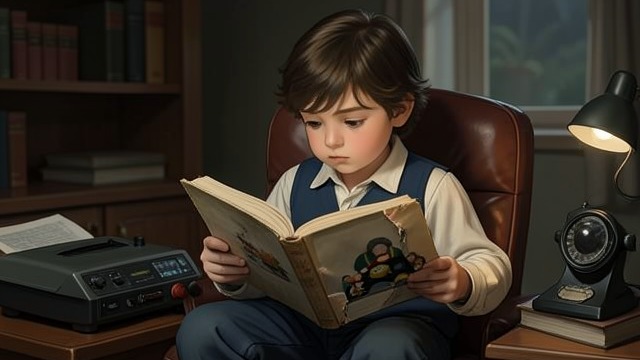
Animals and Death
Stories with Loss
Helen’s favorite animal books repeatedly end with the death of an animal. As a child she reads toward those endings with dread, knowing that the beloved creature may not survive.
A Special Exception
The Goshawk differs because Gos is lost rather than confirmed dead. That uncertainty leaves an opening for hope that Helen only understands much later.
The childhood reader stores a model of loss that adulthood will reactivate.
Orfeo’s Search
Following the Lost
A Wife Taken Away
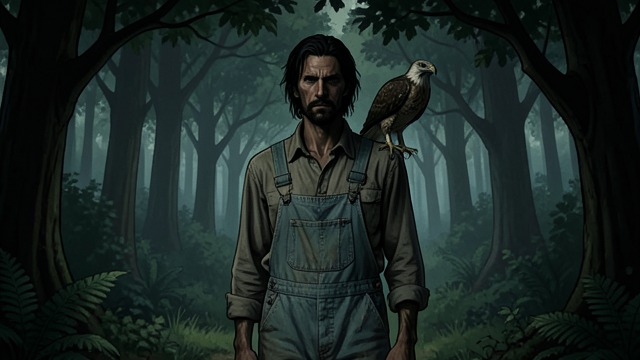
In the poem Sir Orfeo, Heurodis is carried into the otherworld, and Orfeo abandons his kingdom to live in the forest. Grief turns him into a solitary wanderer.
The Hawks’ Passage
A party of falconers leads Orfeo toward the world where his wife has gone. The hawks’ flight and their quarry help him cross a boundary that ordinary life cannot cross.
The story gives Helen an old pattern for the desire to follow loss.
Merlin in the Forest
A Feral Mourner
Grief Becomes Madness
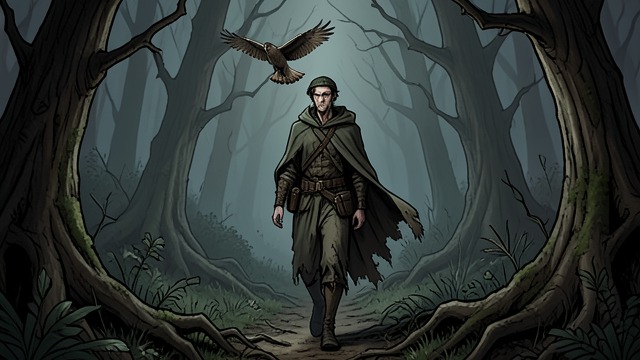
Geoffrey’s Merlin withdraws into the woods after a devastating battle and forgets his human community. The forest becomes both refuge and altered state.
A Pattern Recognized
Helen sees how the image resembles her own retreat toward the hawk and wild landscape. The myth does not diagnose her, but gives shape to a dangerous impulse to abandon ordinary life.
Feral freedom carries both imaginative power and real cost.
The Dream of Retrieval
Searching for the Dead
The Hawk as Guide
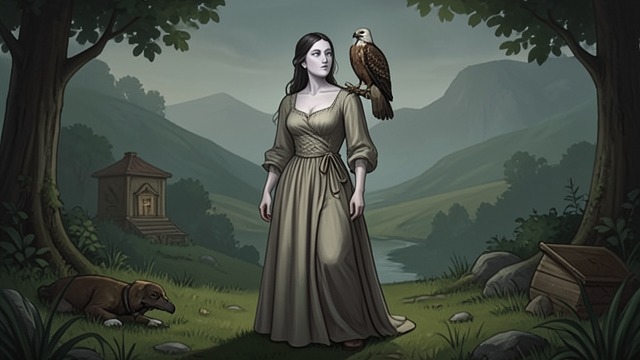
Helen dreams of a hawk slipping into another world and wants to follow it. Beneath the dreams lies a wish to find her father among the lost and bring him home.
A Child’s Logic
The desire is not governed by ordinary evidence. It grows from the suddenness of death and from the childhood story in which Gos remains somewhere in the forest.
Myth makes the wish understandable without making it possible.
Leaving the Otherworld
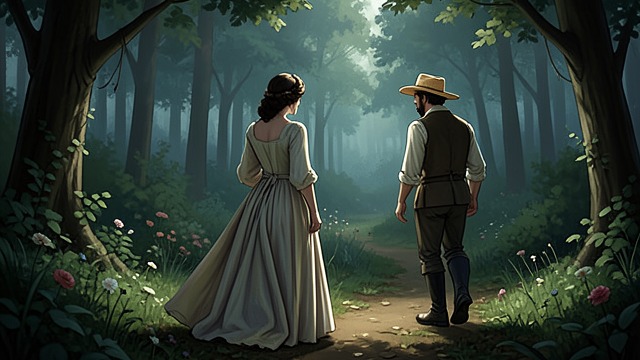
Accepting the Boundary
A Temptation to Return
At White’s cottage, Helen feels the old impulse to seek out someone who might bring the dead author back into view. The place seems to offer one more route into a vanished life.
A Deliberate Departure
She sets the desire aside, salutes a living man in the garden, and walks away. White is gone, and the hawk has flown.
The boundary does not destroy memory; it lets Helen honor the dead without trying to recover them.
Helen’s childhood reading years
during Helen’s later return to medieval poetry
when Helen recalls Geoffrey of Monmouth’s Vita Merlini
the spring following Helen’s father’s death
near the ending, during Helen’s visit to White’s former cottage
